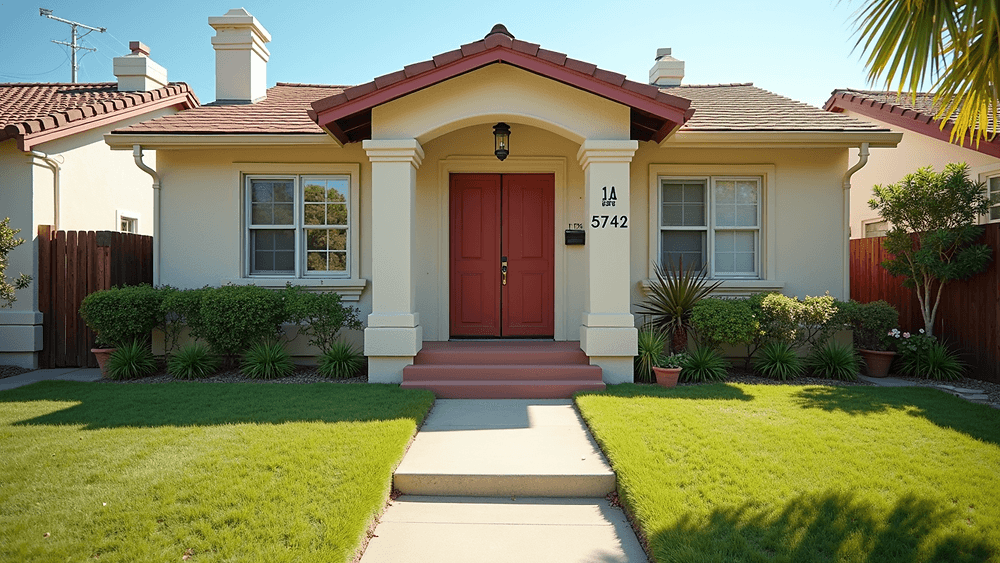
Hiring a painting contractor in San Diego County is a higher-stakes decision than most homeowners realize. California is a heavily-regulated contracting market and an aggressively litigious one. If you hire wrong, you can end up financially responsible for an uninsured injury on your property, or stuck with a paint job that fails inside two years and a contractor who will not return your calls. This guide walks through how to evaluate any San Diego painting contractor - including ours - using criteria that hold up.
Step One: Verify the License
California requires a Contractors State License Board (CSLB) license for any project over $500. The license you want for painting is class C-33. To verify a contractor:
- Ask the contractor for their CSLB license number. It should appear on the truck, the bid, and the contract.
- Visit cslb.ca.gov/OnlineServices/CheckLicense and enter the number.
- Confirm the license is active, the classification includes C-33, and there are no recent disciplinary actions or unresolved complaints.
If the contractor cannot give you a license number, or the license is inactive, walk away. Working with an unlicensed contractor on a job over $500 is a misdemeanor for the contractor and exposes you to liability you do not want.
For reference: Tony's Painting CA Inc. holds CSLB license #803527, class C-33, and has held it continuously since the early 1980s.
Step Two: Insurance - Both Kinds
A painting contractor working at your property should carry two insurance policies:
- General liability insurance. Covers property damage caused by the crew - a dropped ladder through a window, paint overspray on a neighbor's car, that kind of thing. Ask for a current certificate of insurance.
- Workers compensation. Covers crew members who are injured on your property. If a contractor does not carry workers comp and a worker is hurt at your home, the worker can come after you for medical bills and lost wages. This is not theoretical.
Ask for the certificate of insurance in writing. Ask for your name and address to be listed as the certificate holder. A real contractor will email it to you the same day. An evasive answer is a red flag.
Step Three: Climate-Rated Products
San Diego County is not one climate. The marine layer keeps the coast cool and damp; the inland east county runs hot and dry; the canyons collect moisture. A paint that performs beautifully on a beach cottage in Encinitas may chalk and crack on a south-facing stucco wall in Rancho San Diego in three years.
Ask the contractor what product system they recommend and why. The answer should reference your home's substrate (stucco, wood, fiber cement, EIFS), your home's exposure (north-facing shade, south-facing sun, coastal salt spray), and the relevant product specification. Generic answers like "we use Sherwin-Williams" or "we use the good stuff" mean they are not paying attention. A real answer sounds like: "For your west-facing stucco we would recommend a 100% acrylic in a flat or low-sheen, applied over a high-grip masonry primer after we patch the hairline cracks at the corners. If the wall has had moisture issues, we would step up to an elastomeric system instead."
Step Four: HOA Experience (If Applicable)
If your home is in an HOA, your painter needs to be fluent in the Architectural Review Committee process. The HOA will likely require:
- Submission of a color scheme for ARC approval before any paint hits the wall.
- Proof of the contractor's license and insurance.
- A certificate of insurance naming the HOA as an additional insured.
- Sometimes a waiver of subrogation.
- Adherence to community rules on hours of work, debris disposal, and parking.
Ask the contractor how often they work in HOA communities and whether they have submitted ARC packages before. A contractor who has done it will know what is in the package without you having to coach them.
Step Five: Written Scope and Written Warranty
Anything verbal disappears the day the work ends. Before you sign anything, the contract should specify:
- The exact scope of work - which surfaces are being painted, in what colors, in what sheens.
- The surface preparation - pressure washing, scraping, sanding, patching, priming, caulking.
- The product system being used, by manufacturer and product name.
- The number of coats.
- The warranty terms in writing, including how long the warranty runs and what it covers.
- The payment schedule.
- Start and completion dates.
If a contractor balks at putting any of this in writing, they have a reason.
Step Six: Red Flags to Walk Away From
Some patterns reliably predict a bad outcome. If you see any of these, get a different contractor:
- A price over the phone, sight unseen. No honest contractor can scope a paint job without seeing it.
- Pressure to sign today for a "discount." Real contractors are booked weeks out and do not need to discount-pressure.
- No license number, or a license number that does not check out.
- Cash-only payment, or payment in full upfront. California limits initial deposits to 10% or $1,000, whichever is less. Anyone asking for more is breaking state law.
- Vague answers about products, prep, or warranty.
- Subcontractors you have never met. Ask who is actually doing the work.
Step Seven: What "Scope Boundaries" Looks Like
A good painting contractor is also clear about what they do not do. A C-33 painting license does not cover:
- Parking-lot or athletic line striping (requires a C-32 license).
- Lead or asbestos abatement (requires separate state and federal certifications including EPA RRP).
- General contracting work.
- Roofing, gutter, or significant exterior carpentry.
If a painting contractor offers to do any of these without holding the right license, that is a problem for you, not just for them. Tony's Painting works strictly within our C-33 scope.
How to Compare Multiple Bids
Get at least two written bids. Compare on:
- Scope and prep: are they doing the same work?
- Product: are they using comparable paint systems?
- Warranty: who covers what, for how long?
- Crew: are they sending their own people or subbing it out?
- Total price.
The cheapest bid is almost never the best. If one bid is significantly lower, something has been left out - usually surface preparation, which is where eighty percent of a paint job's longevity comes from.
Frequently Asked Questions
How long should a quality exterior paint job last in San Diego?
For stucco with proper preparation and a quality acrylic or elastomeric topcoat, expect seven to ten years on coastal homes and five to eight years on inland east-county homes with heavy sun exposure. Wood and trim run shorter - three to seven years.
Are the cheapest painting contractors usually a problem?
Often, yes. The work itself is straightforward; what costs money is the labor for proper preparation, the quality of the product, the license and insurance overhead, and the warranty backing. A bid that is thirty percent or more below the others has cut something out, and almost always it is the prep.
How do I verify a contractor's reviews are real?
Check more than one platform. Google Business Profile reviews, Yelp, and a contractor's own site should all line up. Look for reviews that mention specific neighborhoods, specific project types, and the names of crew members or owners. Generic five-star reviews with no detail are easy to manufacture.
What does Tony's Painting CA cover under warranty?
Our warranty terms are written on every contract and depend on the substrate, the product system, and the prep scope. Ask for the warranty language up front and we will provide it before you sign.
Get a Written Estimate
If you would like Tony's Painting CA on your bid sheet, call (619) 536-6969 or request an estimate. CSLB License #803527, C-33. Family-owned in San Diego County since 1982.