
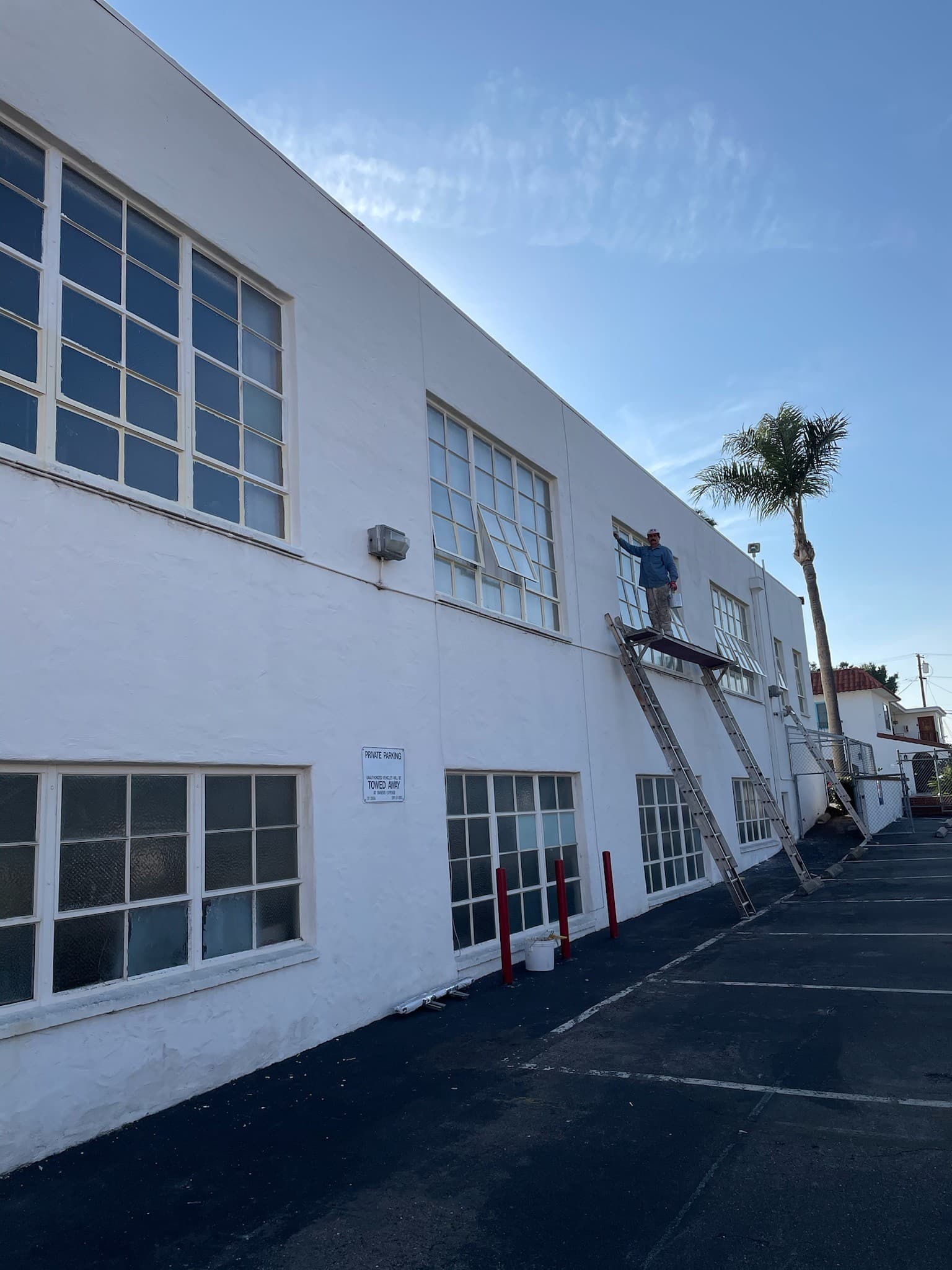
Exterior repaints in San Diego are primarily stucco and wood siding, with trim and accent work as additional scope items. Variables affecting pricing include square footage, surface conditions and prep, coating system, and coastal versus inland exposure. These are documented during the on-site walkthrough and reflected in the written proposal.
How an exterior repaint actually runs
Pressure wash
Every exterior repaint starts with a proper wash to remove dirt, mildew, salt residue (coastal), and loose chalking. We use the right pressure for the substrate — too high blows stucco texture off; too low doesn’t actually clean. Cheap painters either skip this or do it too fast.
Scrape and sand
Any loose or failing paint is removed before new paint is applied. On stucco that typically means scraping and feathering. On wood siding it can include scraping, sanding, and spot-priming with bonding primer where applicable. Prep specifics for a given project are documented in the written proposal.
Caulk and seal
We re-caulk around windows, doors, trim transitions, and stucco-to-wood joints. Old caulk shrinks and cracks. New caulk is the difference between water staying out and water getting behind paint.
Stucco patching and dry rot repair
Hairline cracks get a flexible patching compound and primer. Larger cracks (over 1/8”) get inspected before we touch them — sometimes they signal a structural issue worth flagging. Soft spots in stucco get cut out and rebuilt with patching mortar. Dry rot on adjacent wood gets knocked out a couple of inches past where it stops.
Application
Brush and roll for trim, eaves, and detail. Spray for the body of the house on most jobs (with proper masking). Two finish coats minimum. Specific paint brand and product line are in your written scope.
Final walkthrough
Before we’re done, we walk the perimeter with you. Touch-ups happen on the spot. Caulk lines checked. Trim lines checked. When you’re satisfied, we issue the final invoice.
Coastal vs. inland: what changes
Coastal homes (within a mile of the water)
Coastal exposure — salt air, marine layer moisture, and direct UV — affects exterior coating performance. Coating system selection (including elastomeric where applicable on stucco), UV-rated exterior products, pressure washing to address salt residue, and caulking are common prep considerations for coastal homes. Exterior repaint timelines vary based on exposure, substrate condition, prep quality, product system, maintenance, color selection, and proximity to coastal conditions.
Inland and North County
Inland properties typically see less salt exposure but stronger UV and larger temperature swings. Hairline cracking in stucco is a common substrate condition. UV-rated exterior products are often part of the coating-system recommendation. Exterior repaint timelines vary based on exposure, substrate condition, prep quality, product system, maintenance, color selection, and proximity to coastal conditions.
East County and high-UV exposure
East County summers run hot and dry. UV holdout matters more than anything else. Dark exterior colors fade fastest here — we’ll tell you which paint product line holds color longest for your specific exposure.
What pushes an exterior quote up
- Prep work — failing previous coating, significant stucco cracking, dry rot, mildew.
- Height — two-story stairwells, gables, dormers, scaffolding requirements.
- Trim and accent complexity — heavy crown, wainscoting, multiple accent colors.
- Elastomeric coating vs. standard exterior paint (mostly coastal stucco).
- Color changes — going dark-to-light or vice versa.
What San Diego clients say
“Jonathan and his team did an outstanding job, his attention to detail and thorough prep work truly set the stage for a flawless finish. Highly recommend for anyone wanting top-quality results!”
Common exterior painting questions
Yes — most San Diego exterior work is stucco. We pressure wash, scrape any failing paint, patch hairline cracks with flexible compound, spot-prime patches and any bare stucco, then apply two finish coats. On coastal homes or stucco with significant cracking, elastomeric coating is often the right call.